
New patients: $199/mo for 1,000 FUE grafts
Surgical
Non-Surgical
Diagnose
DFI featured
Signature

DFI Hair Restoration

The technique we built our reputation on. Sub-1mm precision, lifetime growth.

Face
Body
Skin
Botox featured
Most Booked

Botox & Fillers

Soft, expressive, and never frozen. Done by clinicians who under-treat first.

Free consultations in Totowa, NJ

Free hair scanBook a visit
Hair transplant | Men

No cuts, no scars, no stitches

  • DFI and FUE: follicles moved individually, never in strips
  • No skin removed, so no linear scar and no swelling
  • For men and women with all kinds of hair loss
Male Hair Restoration at Eternal Hair & Esthetics

Targeted areas where DFI + FUE can help

  • Receding hairline
  • Temple recession
  • Frontal thinning
  • Crown thinning
  • Advanced loss
  • Extensive loss
Hair transplant | Men

Three steps behind a high success rate

  • Extraction: donor follicles are taken one by one under strict DFI guidelines
  • Conservation: grafts are held in a hypothermosol solution at an optimal temperature
  • Implantation: a tool under 1 mm wide sets the direction, depth and angle of every graft
  • New hair grows in over 8–12 months; optimal results at 12–18
Questions about the process →
Hair transplant | Men

Simple, transparent pricing

What makes DFI + FUE the smart choice

No FUT stripUnlike FUT, no strips of skin are cut away, so there is no linear scar.
Natural directionEvery graft’s direction, depth and angle is controlled.
Lifetime donor hairFollicles from the back of the head are genetically resistant to loss.
A full work-upA dermatological scalp exam and donor-density tests come first.
Timeline to results

Your new hair by November 2027

  1. Weeks 2–6

    Normal shedding

    Some transplanted hairs fall out 2–6 weeks after your procedure. It is normal, and it does not mean the transplant failed.

    November
    Procedure day
    December
    Shedding phase
  2. Months 2–18

    Document your progress

    New hair grows in gradually over 8–12 months, and optimal results usually show at 12–18. We see you at 2, 6, 9, 12 and 18 months, in person or by video.

    January 2027
    Check-in
    May 2027
    Check-in
    August 2027
    Check-in
    November 2027
    Check-in
    May 2028
    Final evaluation
Frequently asked questions

Your questions

Am I a Candidate for a Hair Transplant?

The best way to determine if you're a candidate for hair restoration is to schedule a consultation with an expert at Eternal Hair and Esthetics.

The most common type of hair loss that can be treated with hair restoration is androgenic alopecia. This condition is most common in men and is often referred to as “male pattern baldness,” however women may also experience androgenic alopecia, and it's easily treatable for everyone.

During your consultation, the experienced professionals at Eternal Hair and Esthetics will conduct a thorough dermatological examination of your scalp as well as diagnostic tests to assess the quality and density of potential donor hair sites.

  • Gradual thinning on top of the head
  • Circular or patchy bald spots
  • Sudden loosening of hair
What is a DFI Hair Transplant?

Direct follicle implant (DFI) is a hair restoration technique in which individual hair follicles are extracted from a donor area of the head and implanted one at a time into the area that has been affected by hair loss. The back of the head, which typically has the healthiest follicles that are genetically resistant to hair loss, is the most common donor area.

The team of specialists at Eternal Hair and Esthetics have undergone rigorous training in internationally accredited DFI hair restoration protocols. The team uses an advanced tool that was designed for exclusive use by Eternal Hair and Esthetics to extract and implant each individual follicle.

Why is DFI Better than Other Types of Hair Transplants?

You may have heard of follicular unit extraction (FUE), and/or follicular unit transplant (FUT or FUT-strip). These techniques require surgical incisions during the implantation process and in some cases also during the extraction process. In contrast, DFI requires no incisions at all, and the precision of the implant tool allows your specialist to have maximum control for the most natural-looking results available in the hair restoration industry.

What Should I Expect During a Hair Transplant Procedure?

If you're a candidate for hair transplantation, you'll be given instructions so you'll know how to prepare for your procedure.

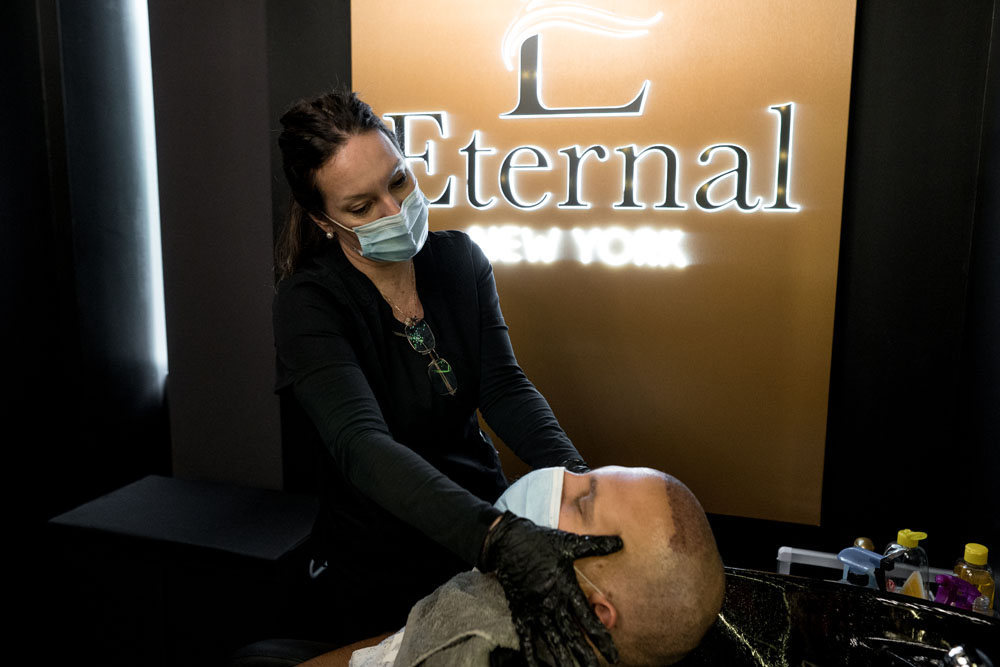
On the day of your treatment, you'll recline in a special chair designed for hair transplant procedures, and your specialist will carefully extract the right amount of healthy follicles from the donor area.

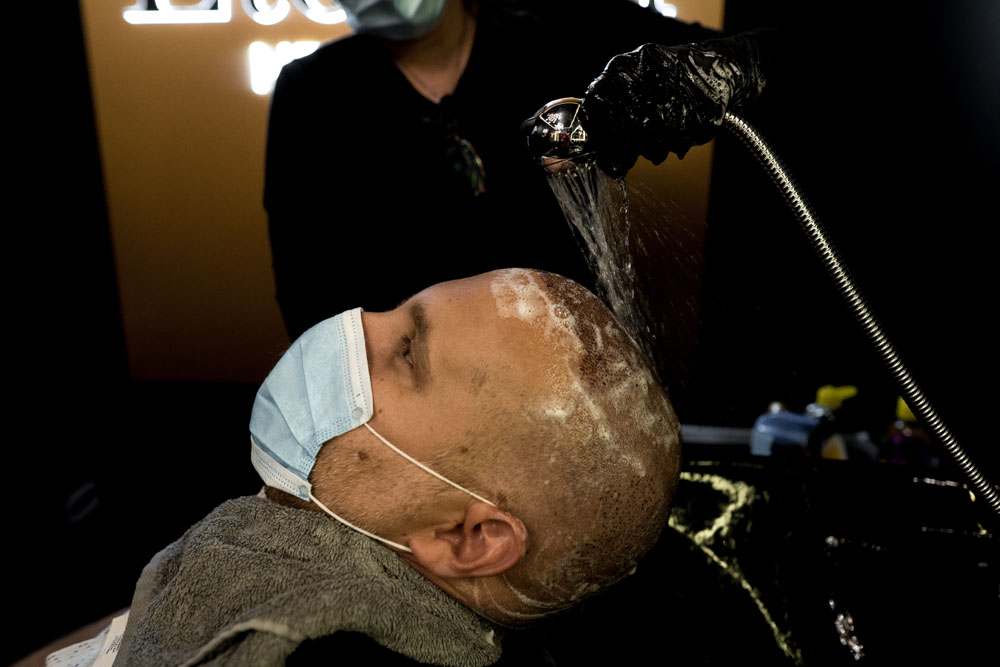
When the extraction is complete, you'll take a break, and then your specialist will begin the process of implanting the donor follicles into the recipient area. They'll finish by placing gauze around your implants, and provide you with instructions about how to care for your implants at home.

When will I see results?

After transplantation, your new hair will gradually grow out in 8-12 months. You might notice that some transplanted hair falls out somewhere between 2-6 weeks after your procedure; this is normal and doesn't indicate that your transplant wasn't successful. Optimal results are usually seen between 12-18 months following your transplantation.

DFI vs. FUE

DFI is a type of FUE; however, not every FUE procedure is a DFI. In our years of haircare restoration, we have discovered that both techniques can provide amazing results. Both systems utilize directly implanting the follicle into the scalp. However, DFI follows a more specialized installation method that allows the follicles to be removed and implanted with a single tool. FUE requires our skilled surgeon to manually remove and implant the follicles.

Pre-Op Care

Your surgery day will require you to follow a number of rules, including a thorough washing with only shampoo, product-free hair and eating a light meal.

Post-Op Care: Post-op will require a very strict focus on guidelines to ensure the procedure works as intended. During post-op, you'll also need to take the time to wash your donor area each day for two weeks (excluding surgery day). You will also need to avoid exercise, smoking, vaping, alcohol and head accessories for the first two weeks following surgery.

Some Common Experiences

There are a few things to note about receiving an FUE procedure as well.

  • Post-Op Shedding Phase – At first this can feel really disheartening. You went in to fix your hair loss, and seeing shedding can make you question the procedure. Let's start by pointing out that shedding means the procedure worked being it's caused by the trauma of the procedure and the replacement of follicles. This can last for a few weeks with hair loss tapering off slowly. Do not panic. This hair is going to grow right back in a short amount of time.
  • “Slow” results – Hair takes a long time to grow, and it takes even longer to fill in. Your scalp needs to accept the follicles followed by letting them grow. This process usually takes between a year and eighteen months; however, some may experience results after an even longer amount of time.
  • Discomfort – We're not going to say that you're going to experience a large amount of pain because the procedure is pretty pain-free. However, you may experience some slight discomfort.
  • Some self-care time – Your scalp will need some TLC after your procedure, so it only makes sense that we lead you every step of the way. We will give you detailed instructions for your post-op care, but expect to care for your scalp for the next few weeks to ensure best results.
Both methods are considered…
  • Painless
  • Capable of giving great results
  • More natural results than other methods
Pre-Op Rules…
  • Avoiding aspirin and ibuprofen for the week prior to surgery
  • No anticoagulant, Vitamin E or fish oil within 72 hours before the procedure
  • No alcohol or narcotics within 72 hours before the procedure
Post-Op Schedule…
  • Day 1-2 – Saline Spray every hour
  • Day 3 – Return to clinic for a graft wash
  • Day 10 – Return to clinic for scab removal wash
Is DFI a Painless Technique?

The procedure is practically painless and causes less irritation than a tattoo. The procedure is performed under local anesthesia so that the patient can relax, listen to music, watch TV, enjoy a light lunch and even nap during the procedure.

Is the Procedure Performed With Local or General Anesthesia?

Each DFI session is performed under local anesthesia. Anesthesia is first injected into the donor area before the follicle extraction and then, once again before the implantation phase.

Will There Be Any Scar in the Donor Area After the Session?

There will be no scar or mark after a DFI technique, only a slight reddening in the donor area, which will be completely relieved within a week.

Will the Implanted Hair Fall Out?

The implanted hair will not fall off because it is resistant to the DHT hormone that causes hair loss. It will remain on your scalp for life. These particular hair follicles that are located in the back of your head known as the donor area, do not have the genetic markers from androgenetic alopecia, and this is why these follicles are the most viable.

How Long Does It Take to Heal in the Donor Area?

The average healing period is 3 to 5 days. After 3 days, the extracted holes will start healing almost immediately after the procedure.

What Precautions Should Be Taken Pre- and Post-Procedure?

A week before the procedure, the client has to stop consuming vitamins, aspirin, alcohol and tobacco. Patients suffering from diabetes, hypertension, heart problems, or if they take psychiatric medications, should consult with their physician as well as the Eternal Hair expert medical staff prior to the procedure.

After the procedure, any heavy exercise, such as weightlifting or swimming, must be avoided. Only after 12 days following the procedure should the patient resume light exercises such as light jogging or walking. Avoid exposing the scalp to direct sunlight for 30 days after the procedure but avoid wearing hats or anything that directly covers the scalp for at least 72 hours following the procedure.

How much does DFI & FUE Hair Transplant cost?

Financing starts at $199 a month for 1,000 grafts through Cherry, for qualified new clients. Your exact cost depends on the number of grafts and the technique, and you will have it at your free consultation.

Is the consultation really free?

Yes. Consultations are free, online or in person at our Totowa clinic, with no obligation.

4.9 on Google, from 825 reviews

Book a free consultation
Hair transplant | Men

DFI & FUE Hair Transplant

$199/mo

For 1,000 grafts with Cherry financing, for qualified new clients

Financing availableSee payment plans
Inside the Totowa clinic825 Google reviews

Your future hair is right around the corner

Totowa, New Jersey

825 Riverview Drive, Floor 2
Totowa, NJ 07512

(212) 344-4247

Free private parking · English & Spanish

Get directions →
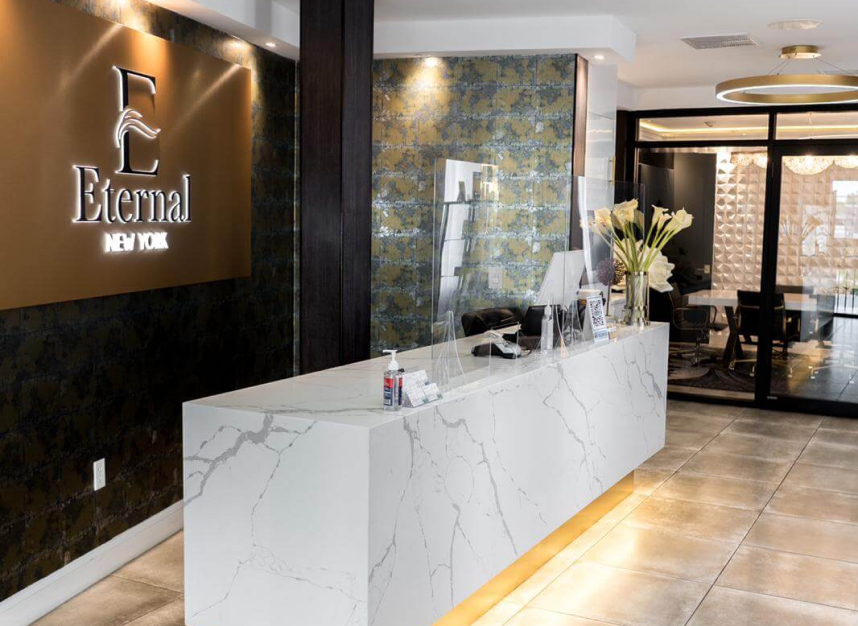
The reception at Eternal Hair & Esthetics