New patients: $199/mo for 1,000 FUE grafts
Surgical
Non-Surgical
Diagnose
DFI featured
Signature

DFI Hair Restoration

The technique we built our reputation on. Sub-1mm precision, lifetime growth.

Face
Body
Skin
Botox featured
Most Booked

Botox & Fillers

Soft, expressive, and never frozen. Done by clinicians who under-treat first.

Free consultations in Totowa, NJ

Free hair scanBook a visit
Hair loss | Women

Female hair loss has answers

  • Affects up to 40% of women by the age of 50
  • Densitometer, hair-pull and pluck tests find the cause
  • Medical and surgical options, chosen with you
Female Pattern Hair Loss New Jersey | Women Hair Restoration Surgery at Eternal Hair & Esthetics

Where female hair loss shows first

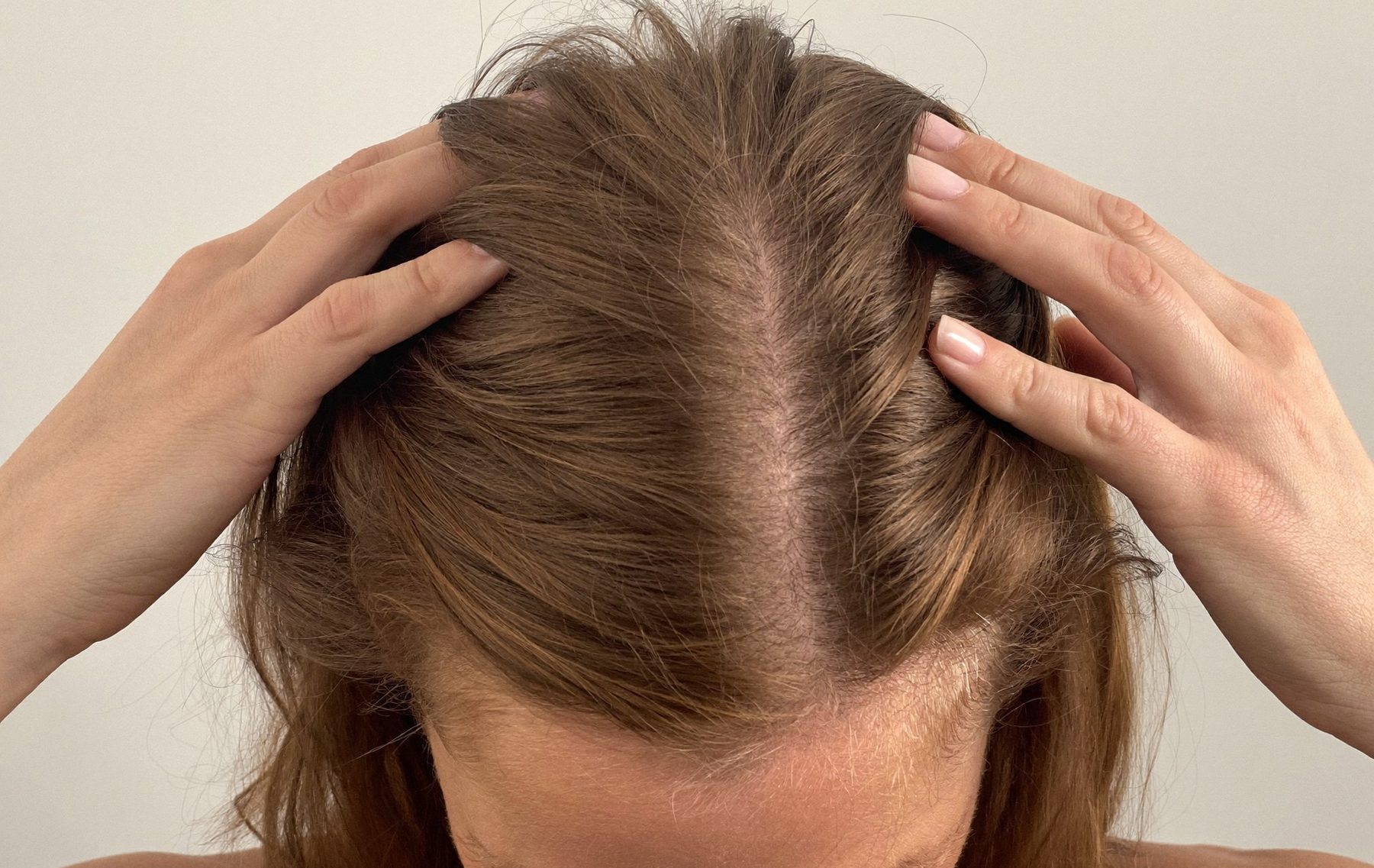
  • Widening part
  • Thinning hairline
  • Frontal thinning
Hair loss | Women

Finding the cause comes first

  • Your history of thinning, family history and where the part is widening
  • A densitometer checks the thinning areas for miniaturization
  • Hair-pull and hair-pluck tests for shedding and damage
  • Blood work or a biopsy if the common causes are ruled out
Questions about the process →
Hair loss | Women

Start with a free consultation

Treatment options for women

A note on finasteride
  • Women who are pregnant, or trying to become pregnant, should not take or even handle oral finasteride. Topical custom prescriptions may be an option.
Frequently asked questions

Your questions

What is Female Pattern Hair Loss?

Female pattern hair loss is a condition that occurs in women who suffer from androgenic alopecia. Affecting up to 40% of women by age 50, it begins with patients noticing a thinning of their hair, along with obvious signs of shedding, such as more hair falling out in the shower, in their hairbrush, and/or on their pillow when they wake up in the morning.

Unlike men who suffer from male pattern hair loss, the signs and symptoms in women are more pronounced. Where men will notice thinning in certain areas of their scalp such as temples and crown, women with female-pattern hair loss will notice hair thinning all over their scalp with more loss occurring on the top of the head, causing a widening of the center hair part.

The one piece of good news about female pattern hair loss is that it rarely if ever leads to complete baldness as it can for men.

What Are the Causes of Female Hair Loss?

Age: Some amount of hair loss is natural as we age, whether we are male or female.

Hormones: Hormonal changes can lead to female pattern hair loss. For women, especially those who are going through or who have already experienced menopause, the likelihood of experiencing hair loss is much greater. In particular, changes in androgen levels (male hormones such as DHT) are responsible for not only hair loss on a woman's head, but increased and coarser hair on other parts of her body.

Genetics: If your mother, grandmother or other female close relatives suffered from female pattern hair loss, you are more likely to develop the condition yourself.

Diagnosis of Hair Loss in Women

The diagnosis of "female pattern" hair loss is relatively straightforward when there is a history of gradual thinning in the front and/or top of the scalp, a relative preservation of the frontal hairline, a positive family history of hair loss and the presence of miniaturization in the thinning areas. Miniaturization, the progressive decrease of the hair shaft diameter and length in response to hormones, can be identified using a hand-held device called a densitometer.

Besides densitometry, two other common diagnostic tests that can be performed in the physician's office are the hair-pull (a test for shedding) and the hair pluck (a test for hair damage). If common causes are ruled out, a more thorough diagnosis is called for, which may include blood work, a biopsy, or other laboratory testing.

What Are the Types of Female Hair Loss?

Alopecia Areata

Alopecia areata is an autoimmune condition where the immune system mistakenly attacks the hair follicles, causing hair loss on the scalp, face and other areas of the body. Alopecia areata can occur in multiple family members, suggesting genetics play a part in this condition. It affects both men and women and often first appears in childhood.

Anagen Effluvium

Anagen effluvium is the sudden loss of hairs in the growing (anagen) phase. This condition may be caused by exposure to chemicals or toxins such as those found in chemotherapy or radiation for cancer treatment. The condition is generally reversible and hair typically regrows within 1-3 months, but some hair loss can be permanent.

Hypotrichosis

Hypotrichosis is a condition where there is no hair growth from the time of birth. Rather than having hair and losing it over time, people with hypotrichosis never grow any hair. This condition is thought to be caused by a genetic deviation during fetal development.

Androgenetic Alopecia

Androgenetic alopecia, or hereditary hair loss, is the most common type of hair loss and it's progressive. Men and women with androgenetic alopecia are born with inherited hair follicles that are sensitive to a hormone called dihydrotestosterone (DHT). This hormone causes hair follicles to miniaturize over time, producing thinner and finer hair. Eventually, the follicles stop producing normal hairs, leaving only "peach fuzz". Men with this condition typically notice a hairline that recedes or thinning at the crown. Women with androgenetic alopecia don't always follow a recognizable pattern, but may see a widening part, overall thinning or patchy hair loss.

Scalp Folliculitis

Scalp folliculitis is usually due to a bacterial infection and occurs when hair follicles become inflamed due to blockage or damage. Follicles may be surrounded by a ring of inflammation and look like acne. In the early stages, hair may still be present in the follicle, but as the condition progresses, it will fall out. In severe cases, the inflammation can permanently damage hair follicles and result in hair loss.

Telogen Effluvium

Telogen effluvium occurs when hair follicles are prematurely pushed into the resting (telogen) phase of hair growth. This condition is usually due to an acute external factor such as physical trauma, surgery, major illness or other intense stressors on the body. It typically appears as diffuse thinning across all areas of the scalp, and in many cases, is temporary and reversible.

Traction Alopecia

Traction alopecia results from damaged hair follicles due to constant tension or pulling over a long period of time. Repeatedly wearing tight hair styles, such as ponytails, buns or braids, can cause traction alopecia. This condition typically occurs near the temples or along the hairline. African-American women often experience this type of hair loss at their edges, which is the hairline area that goes from ear to ear and frames the face.

Trichorrhexis Nodosa

Trichorrhexis nodosa is characterized by weak points, or nodes, present along the hair shaft. The nodes cause hair to break easily, leading to the appearance of thinning hair or patchy hair loss. The condition can be triggered by harsh styling practices such as the overuse of chemicals and heat styling tools. In some cases, trichorrhexis nodosa may be caused by underlying medical disorders such as thyroid problems, an iron deficiency or a buildup of ammonia in the body.

Trichotillomania

Trichotillomania is an impulse control disorder that drives individuals to compulsively pull out their own hair. Typically, trichotillomania results in patchy bald spots on the scalp, eyebrows and/or eyelashes.


Can Women Undergo Hair Restoration Surgery?

Absolutely. As long as there is an adequate donor region from which follicular grafts can be harvested, women benefit immensely from hair restoration surgery. Women experiencing androgenetic alopecia or hair loss caused by scars from accidents, burns or cosmetic procedures very often make great hair restoration candidates.

Way to Prevent Women's Hair Loss

Yes, although there are many hair loss medications on the market that promise to prevent further loss and regrow hair, oral finasteride and topical minoxidil are the two-main proven hair loss prevention medications. Women who are pregnant or are trying to become pregnant should not take or even handle oral Finasteride, but may use topical custom prescriptions.

There are several forms of alopecia areata, including…
  • Alopecia areata (patchy hair loss): This is the most common form of alopecia areata, resulting in one or more round patches of hair loss.
  • Alopecia totalis – This form of alopecia areata is characterized by the complete loss of scalp hair.
  • Alopecia universalis – This condition is the most advanced form of alopecia areata and results in the total loss of hair on the scalp and body.
  • Ophiasis – This form of alopecia areata occurs in a wave pattern around the edge of the scalp, typically at the back of the head.
How much does Female Hair Loss Treatment cost?

It depends on the area and on your plan. Your free consultation, in person or by video, ends with a clear price, and financing is available.

Is the consultation really free?

Yes. Consultations are free, online or in person at our Totowa clinic, with no obligation.

4.9 on Google, from 825 reviews

Book a free consultation
Hair loss | Women

Female Hair Loss Treatment

Freeconsultation

Your plan and your price, before you commit

Financing availableSee payment plans
Inside the Totowa clinic825 Google reviews

Your future hair is right around the corner

Totowa, New Jersey

825 Riverview Drive, Floor 2
Totowa, NJ 07512

(212) 344-4247

Free private parking · English & Spanish

Get directions →
The reception at Eternal Hair & Esthetics