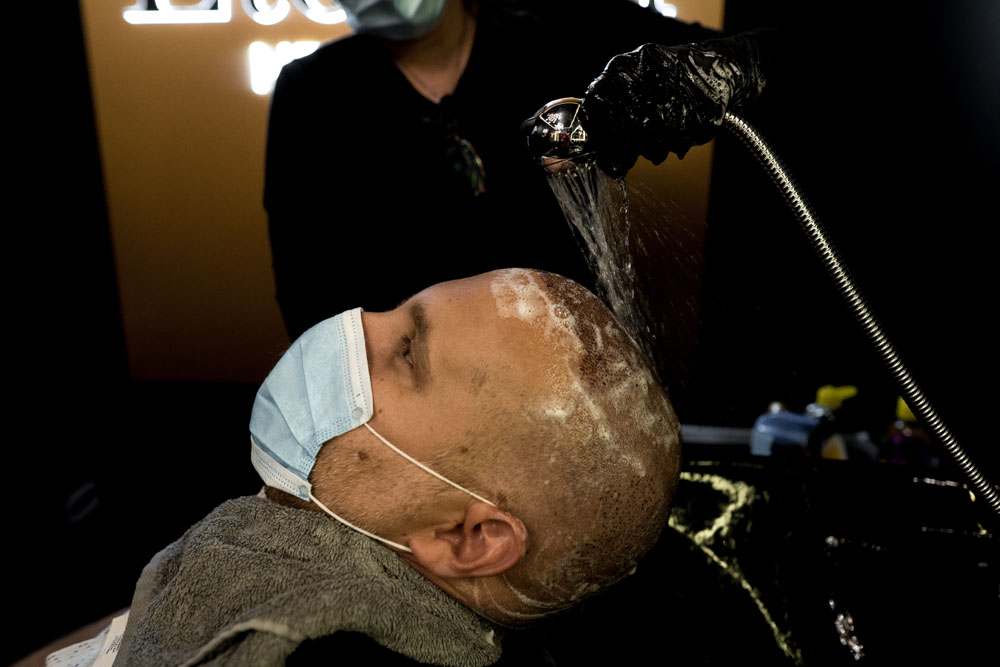
Male Hair Loss Treatment
Your plan and your price, before you commit
Your appointment includes:
- Time with a specialist, in person or by video
- A plan built around your goals
- Clear pricing before you commit to anything


Your plan and your price, before you commit
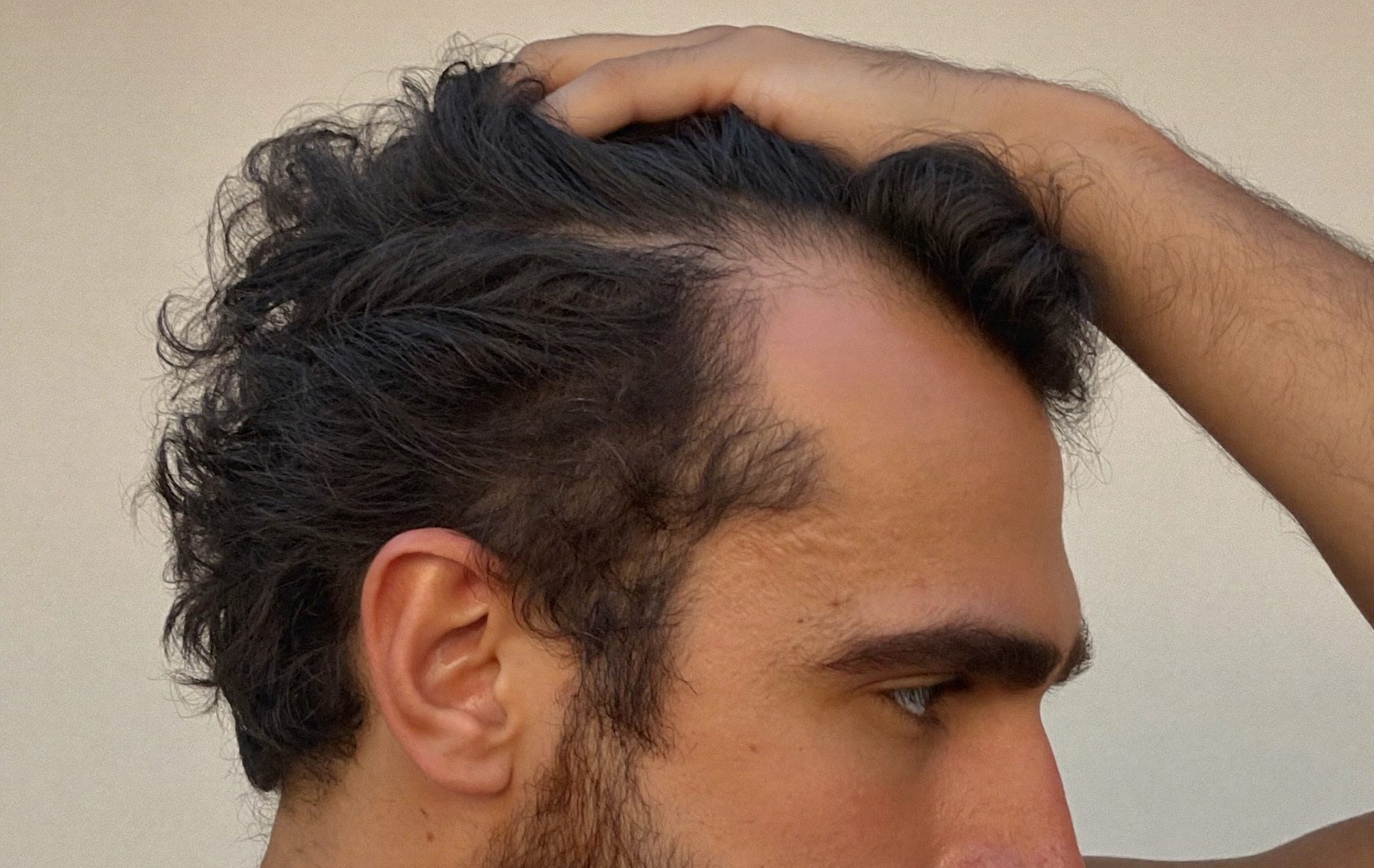
Androgenic Alopecia, also known as male pattern hair loss, is a condition that affects all men at some point as the get older. Most white men develop some degree of baldness, according to their age and genetic makeup. Male pattern baldness affects up to half of all white men by the age of 50 years and up to 80 percent of men in the same group by the age of 70 years. Other ethnic groups such as those of east Asian descent are less affected.
Hair loss in men begins manifesting with the miniaturization of the hair follicle and is generally known to be related to hormones in both males and females.
It is important to understand that each hair on your head lives in small hole called a follicle. Most of the time, the size of the follicle remains the same, and normal hair continues to grow from it. However, in cases of male pattern hair loss, the follicle shrinks. The end result of this shrinkage of the follicle is either shorter finer hair, or no hair growth at all.
At some point, even though the hair follicle itself will remain alive and open in spite of its smaller size, hair simply stops growing.
This is the most common type of hair loss, affecting both men and women as they age. In men, hair often begins to recede from the forehead in a line that resembles the letter M. Women typically retain the hairline on the forehead but have a broadening of the part in their hair.
Some people experience smooth, coin-sized bald spots. This type of hair loss usually affects just the scalp, but it sometimes also occurs in beards or eyebrows. In some cases, your skin may become itchy or painful before the hair falls out.
A physical or emotional shock can cause hair to loosen. Handfuls of hair may come out when combing or washing your hair or even after gentle tugging. This type of hair loss usually causes overall hair thinning and not bald patches.
Some conditions and medical treatments, such as chemotherapy for cancer, can result in the loss of hair all over your body. The hair usually grows back.
This is a sign of ringworm. It may be accompanied by broken hair, redness, swelling and, at times, oozing.

Men normally lose their hair when three main factors interact: genetics, age, and hormones. The androgenetic alopecia, male-pattern baldness happens as hormone levels change over the course of a man's life.
These factors contribute to the gradual shrinkage of the tiny cavities in the skin at the base of hairs, known as scalp hair follicles. Hair grows progressively shorter and finer until no new hairs grow.
As noted, male pattern hair loss is mainly due to hormonal changes. In particular, a hormone called dihydrotestosterone (DHT) can become imbalanced. Too much DHT in the scalp can lead to a shortened anagen phase, which will lead to reduced production of hairs. The hairs that do continue to grow will be much finer.
The chances of developing male pattern hair loss are significantly increased if someone else in your family has experienced the condition.
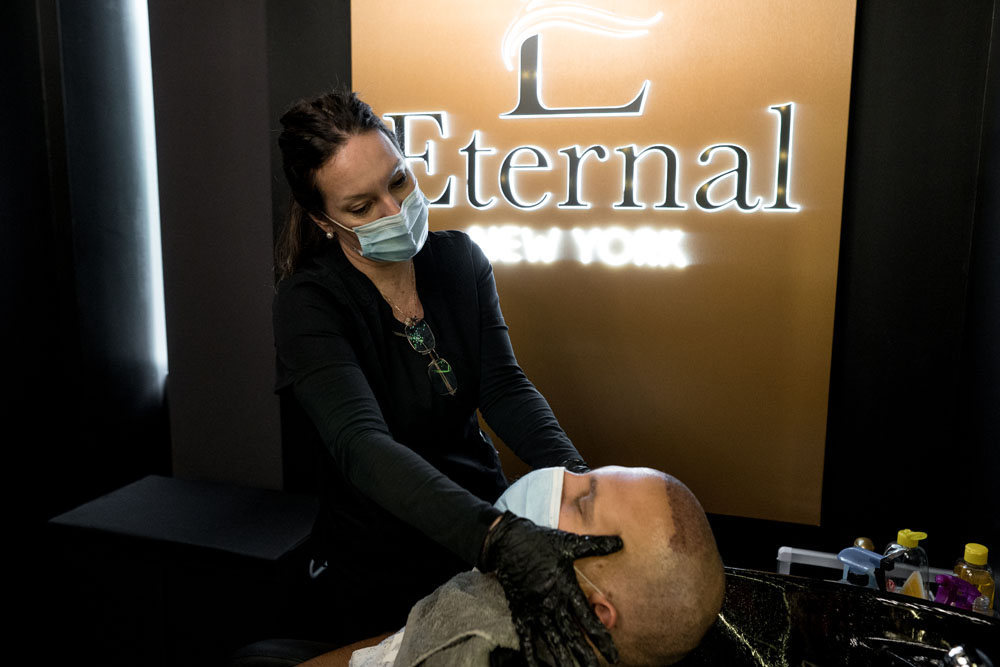
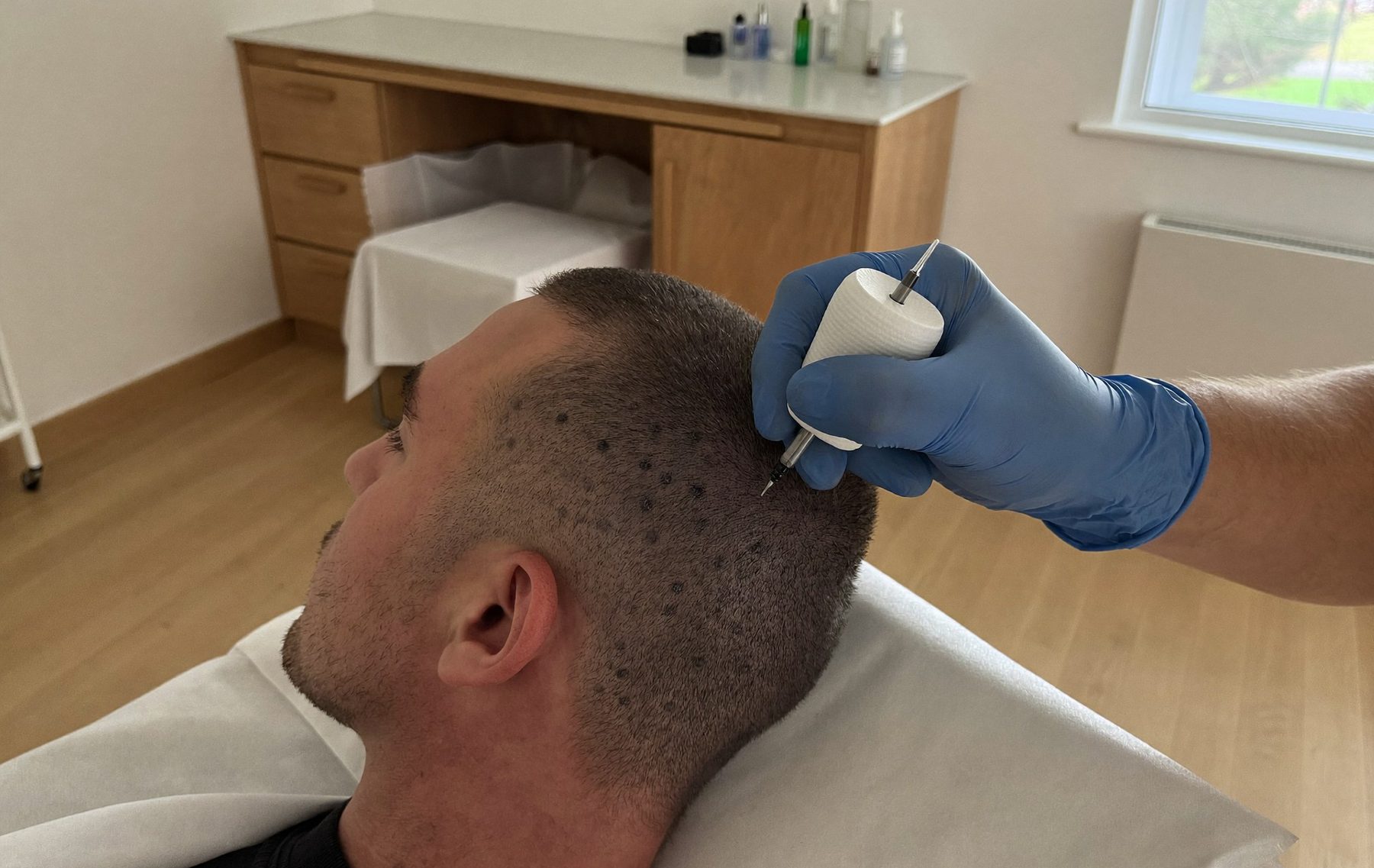
Fortunately, there has been a revolution in androgenic hair loss treatments in recent decades. At Eternal Hair and Esthetics, we offer a range of services which can minimize hair loss, promote renewed growth, or even create new hair follicle sites.
Talk to an Eternal Hair and Esthetics expert today about which option may be right for you. We also offer hair transplant treatments too.
It depends on the area and on your plan. Your free consultation, in person or by video, ends with a clear price, and financing is available.
Yes. Consultations are free, online or in person at our Totowa clinic, with no obligation.
4.9 on Google, from 825 reviews
Book a free consultationYour plan and your price, before you commit
825 Google reviews825 Riverview Drive, Floor 2
Totowa, NJ 07512
Free private parking · English & Spanish
Get directions →